Asteroids & Comets
small bodies and primitive materials
Asteroids and comets preserve a record of conditions in the early solar system and represent the building blocks from which the planets formed. Our research investigates the surface properties and volatile content of these primitive bodies.
Ceres
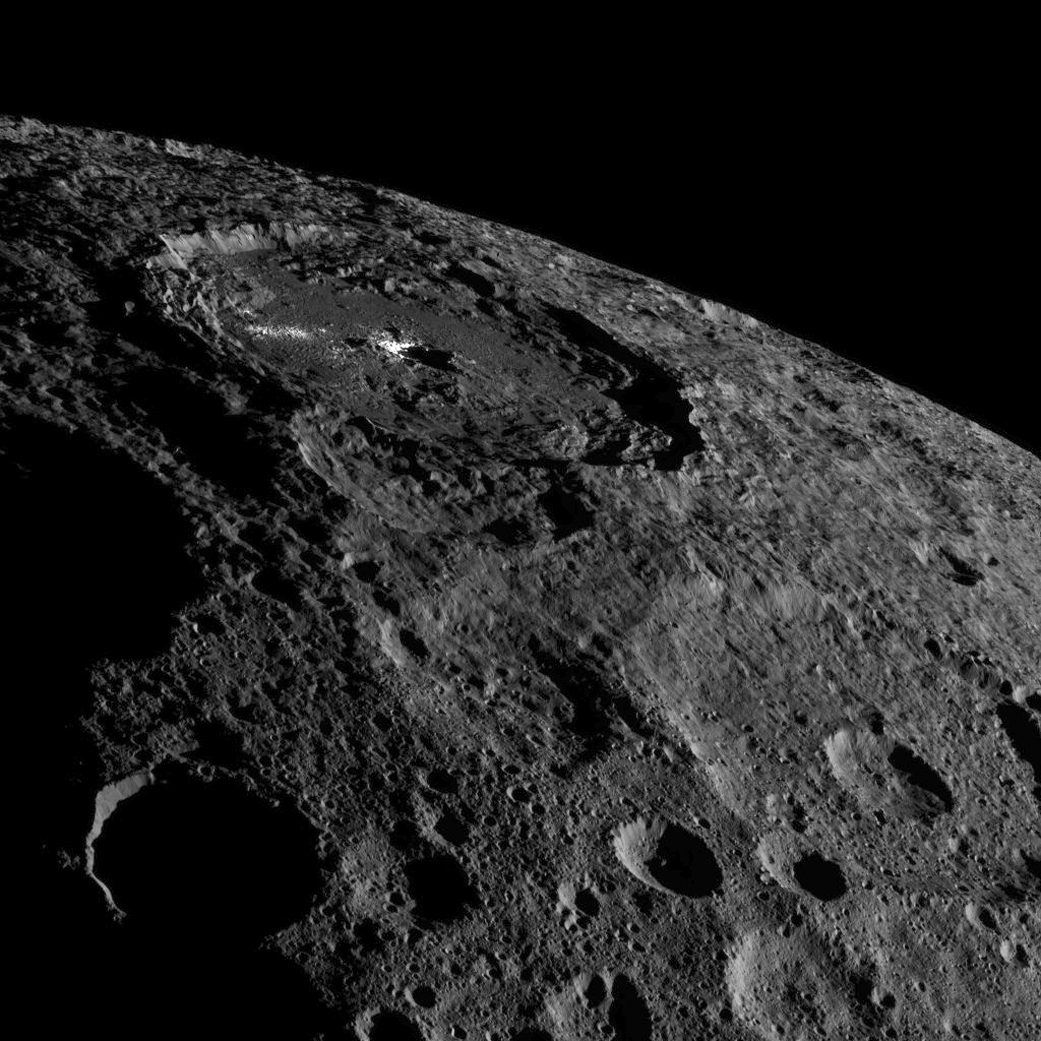
Dwarf planet Ceres is the largest object in the asteroid belt and may harbor subsurface ice. Our thermal models help constrain the stability and distribution of water ice, informing our understanding of Ceres’ volatile inventory and geological history. NASA’s Dawn mission found evidence for widespread ice in the near subsurface and exposed ice in the polar shadows of Ceres, confirming our model predictions.
Water-rich asteroids
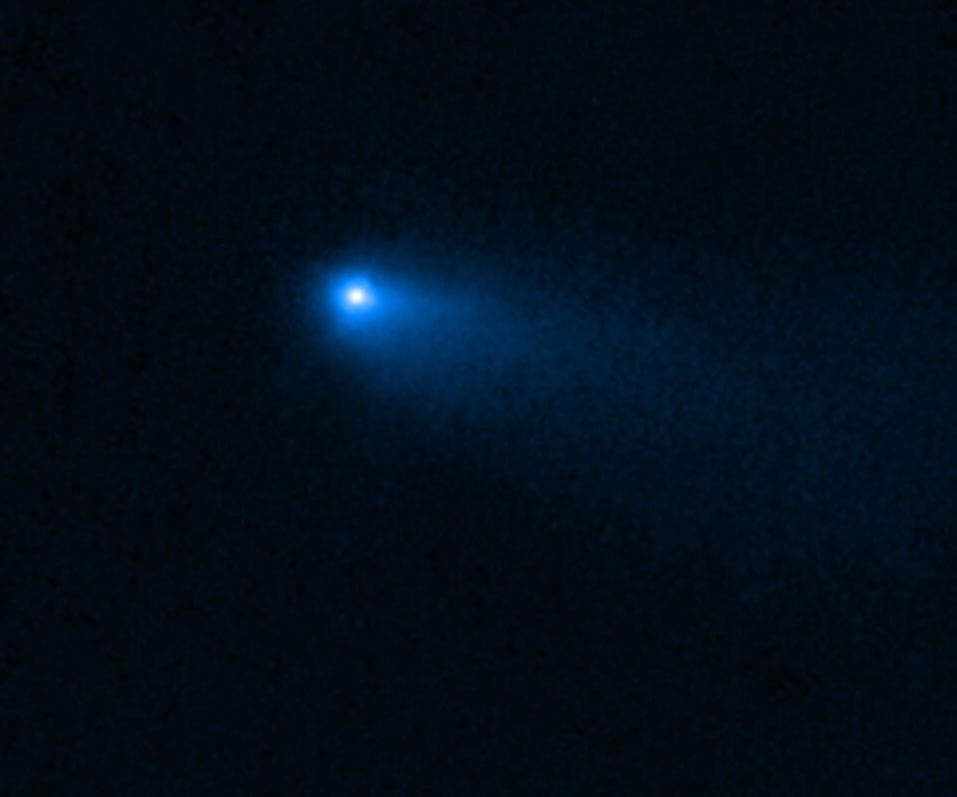
Many of the objects in the main asteroid belt contain high concentrations of water and carbon. Some, called “main belt comets” exhibit activity suggesting ice may be present in their interiors. Our research contributes to understanding the physical properties and thermal environments of these bodies.
Binary and Multiple Systems
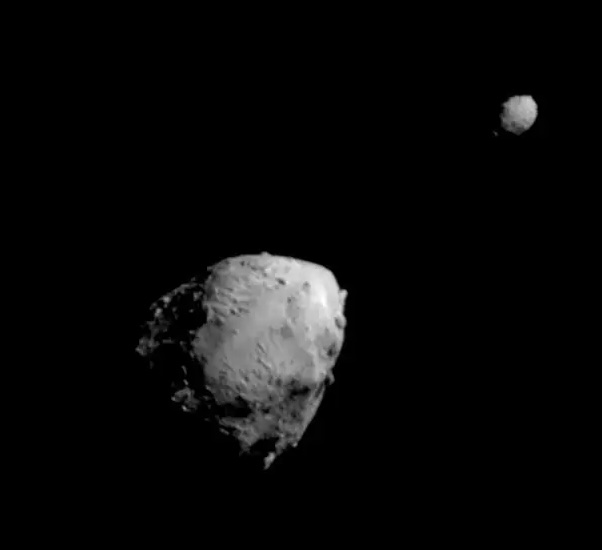
Many asteroids exist in binary or multiple systems, offering unique opportunities to study their masses, densities, and formation histories. We investigate the thermal properties of these systems and their implications for asteroid evolution.
Related Missions
Further information:
- Landis, M. E., Byrne, S., Combe, J.-P., Marchi, S., Castillo-Rogez, J., Sizemore, H. G., Schörghofer, N., Prettyman, T. H., Hayne, P. O., Raymond, C. A., et al. (2019). Water vapor contribution to Ceres' exosphere from observed surface ice and postulated ice-exposing impacts. Journal of Geophysical Research: Planets, 124, 61–75. Link
- Landis, M. E., Byrne, S., Schörghofer, N., Schmidt, B. E., Hayne, P. O., Castillo-Rogez, J., ..., & Russell, C. T. (2017). Conditions for sublimating water ice to supply Ceres' exosphere. Journal of Geophysical Research: Planets, 122, 1984–1995. Link
- Hayne, P. O., & Aharonson, O. (2015). Thermal stability of ice on Ceres with rough topography. Journal of Geophysical Research: Planets, 120, 1567–1584. Link